
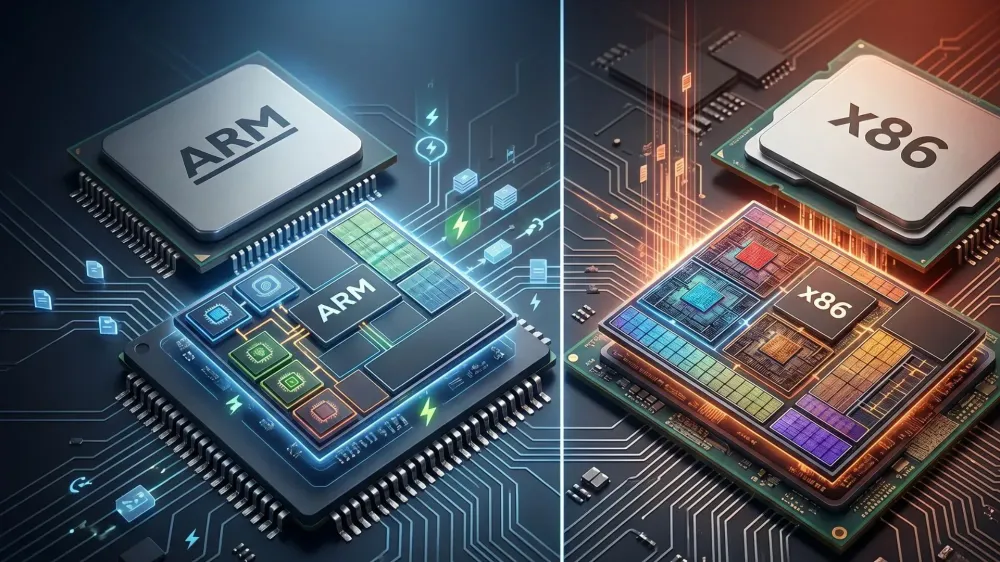
In the world of computers, laptops, servers, and smartphones, we often hear the terms ARM and x86. Both are types of processor architectures, which are the basic workings of a CPU in executing instructions.
Simply put, ARM and x86 are both used to run devices, but they have different characteristics.
What is ARM?
ARM is a processor architecture known for its power efficiency. Therefore, ARM is widely used in battery-powered devices such as:
- Smartphones
- Tablets
- Smartwatches
- Some modern laptops
- IoT devices
- Energy-efficient servers
Examples of devices using ARM are iPhones, iPads, many Android phones, and MacBooks with Apple Silicon chips like M1, M2, M3, and so on.
The main advantage of ARM is low power consumption, cooler temperatures, and good efficiency.
What is x86?
x86 is a processor architecture that has been used in desktop and laptop computers for a long time. Processors from Intel and AMD commonly used in PCs typically use the x86 architecture.
x86 is commonly found in:
- Desktop computers
- Windows laptops
- Servers
- Workstations
- Gaming computers
The main advantage of x86 is high performance and very broad software compatibility, especially for legacy applications and professional software on Windows.
Main Differences between ARM and x86
1. Power Consumption
ARM is usually more power-efficient than x86. This is why ARM is very suitable for smartphones and thin laptops that need long battery life.
On the other hand, x86 tends to require more power, especially for high performance like gaming, rendering, and other heavy workloads.
2. Performance
In the past, x86 was often considered more powerful than ARM. But now, ARM has evolved significantly.
For example, Apple Silicon chips based on ARM can provide high performance while maintaining power efficiency. So, ARM can no longer be considered only for small devices.
However, for certain heavy needs, especially in gaming and Windows workstations, x86 is still very powerful and widely used.
3. Software Compatibility
x86 excels in software compatibility, especially in the Windows ecosystem. Many legacy applications, office software, games, and professional tools are built for x86.
ARM can also run many modern applications, but sometimes adjustments are needed. Some applications may need to be specifically built for ARM to run optimally.
4. Device Usage
ARM is more often used in mobile devices and energy-efficient devices. Examples include phones, tablets, and laptops with long battery life.
x86 is more often used in desktop PCs, conventional laptops, servers, and devices that require broad compatibility.
5. Heat and Efficiency
Because it is more power-efficient, ARM usually generates less heat. This allows ARM devices to be thinner, quieter, and sometimes even fanless.
x86 usually generates more heat, especially when used for heavy workloads. Therefore, many x86 devices require larger cooling systems.
Advantages of ARM
ARM is suitable for those who need lightweight, battery-efficient devices that are still fast for daily use.
Its advantages:
- Power efficient
- Longer battery life
- Cooler temperatures
- Suitable for mobile devices
- Efficient for modern laptops
Advantages of x86
x86 is suitable for those who need broad compatibility and high performance across many types of software.
Its advantages:
- Compatible with many applications
- Suitable for gaming
- Widely used in PCs and Windows laptops
- Strong for heavy workloads
- Very broad software support
So, Which One is Better?
The answer depends on your needs.
If you need a device that is battery-efficient, lightweight, cool, and comfortable for daily work, ARM can be a good choice.
But if you need a computer for gaming, certain Windows applications, legacy software, or heavy workloads that require broad compatibility, x86 is still very relevant.
Conclusion
ARM and x86 have the same function: executing instructions in a computer or device. The difference is that ARM focuses more on efficiency and power savings, while x86 is stronger in compatibility and performance across many applications.
Currently, both are equally important. ARM is becoming more popular due to its efficiency and increasing power, while x86 remains the main choice for PCs, gaming, and many professional needs.
Related Articles


Written by
Wilan
A regular contributor to Bali Island Tekno who actively shares knowledge about technology, programming, and the world of software engineering.