The development of smart bands or smartbands from year to year has attracted more attention. Xiaomi has again introduced the successor to its fitness band line through the Xiaomi Smart Band 10. This latest series brings several significant improvements over its predecessor, starting from a thinner screen bezel, more precise health monitoring sensors, to battery life that remains exceptionally durable.
For those of you looking for a wearable device to support a healthy daily lifestyle without having to spend too much, the Xiaomi Smart Band 10 could be one of the most attractive options right now. Let's check out the full review below!
More Luxurious Design with Ultra-Thin Bezel
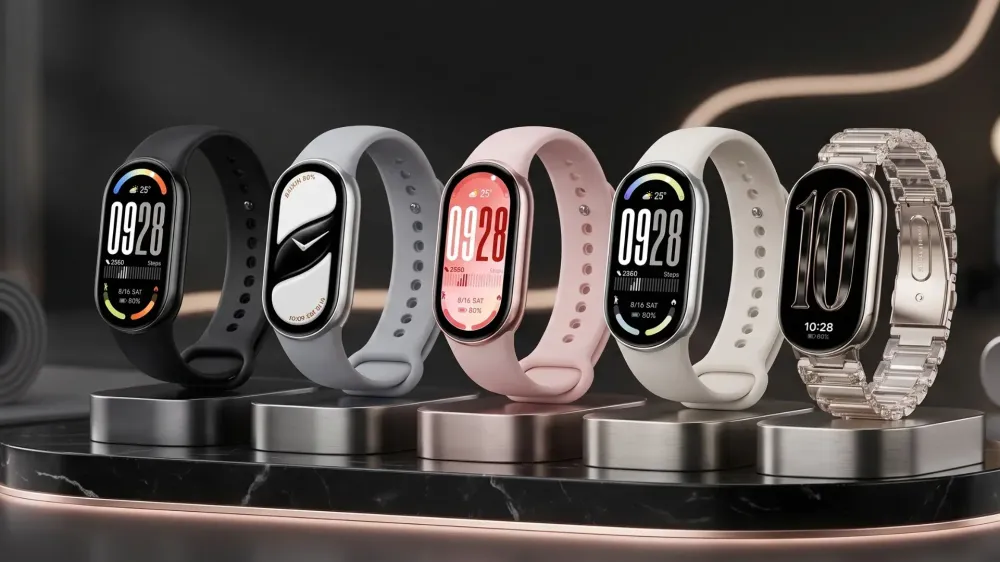
Visually, the Xiaomi Smart Band 10 retains its iconic capsule shape. However, when the screen lights up, the big change is immediately noticeable. Xiaomi has managed to reduce the bezel thickness to 2.0 mm using vacuum encapsulation technology. As a result, the screen-to-body ratio has increased dramatically to 73%.
The frame uses aluminum alloy material with a glossy PVD finish that gives a much more premium feel when wrapped around the wrist. The main body is very light, only about 15.95 grams with a thickness of 10.95 mm. You'll hardly feel any extra weight when wearing it all day, even while sleeping.
In addition to the standard aluminum version, Xiaomi also offers the Ceramic Edition with an elegant white ceramic body, complete with fluororubber strap or premium chain strap options for those who want to look more stylish.
Very Bright 1.72-Inch AMOLED Display
The Xiaomi Smart Band 10 now has a 1.72-inch display with a sharp color AMOLED panel and 60Hz refresh rate. Images, notification text, and interface animations feel very smooth when swiped.
One of the most useful improvements for outdoor use is its peak brightness level, which now reaches 1500 nits (HBM). Compared to the previous generation, this brightness increase ensures that information on the screen remains clearly visible and bright even when you are under direct sunlight. The Auto-Brightness feature is also included so that the screen light level automatically adjusts to room conditions.
Comprehensive Health Features and More Accurate Sensors
Xiaomi has embedded the latest PPG (photoplethysmography) module in the Smart Band 10. The use of dual light sources and dual PD sensors makes heart rate and blood oxygen saturation (SpO2) readings much more stable and accurate throughout the day.
Here are some of the main health feature improvements on the Xiaomi Smart Band 10:
- Sleep HRV Monitoring: Now equipped with Heart Rate Variability monitoring during sleep. This data is very useful for assessing your body's physical recovery and stress levels.
- Sleep Algorithm 2.0: Accuracy of sleep stage detection (deep sleep, REM, light sleep) and wake time has significantly improved compared to the previous series. There is also a weekly and monthly sleep trend report feature.
- Stress and Breathing Monitoring: Measures stress levels in real-time and provides alerts if your stress is too high, complete with breathing exercise guidance.
- Women's Health Tracking: Helps track menstrual cycles and predict fertile periods conveniently.
Abundant Sports Modes and Accurate Swim Tracking
Love sports? The Xiaomi Smart Band 10 provides more than 150 sports modes. From running, cycling, walking, to strength training at the gym.
Interestingly, for those of you who enjoy swimming, this smart band already has 5 ATM water resistance (up to 50 meters depth). Xiaomi has also updated the 9-axis sensor and AI-based swimming stroke recognition technology with a lap count accuracy of up to 96%. For the first time, real-time heart rate monitoring can also work while swimming in water.
Note that the standard version does not include standalone internal GPS, so outdoor running route tracking still uses the GPS connection from your smartphone.
Battery Lasts Up to 21 Days
The main advantage of the Xiaomi Smart Band line that users always like is its battery life. Thanks to power consumption optimization in the HyperOS operating system and more efficient hardware, the Xiaomi Smart Band 10 can last up to:
- 21 Days: For typical daily use without Always-On Display (AOD).
- 9 Days: If you activate the Always-On Display mode continuously.
The charging process uses the typical Xiaomi 2-pin magnetic charging cable, which takes about 1 hour from empty to full.
Full Specifications Table of Xiaomi Smart Band 10
| Component / Feature | Specification |
|---|---|
| Display | 1.72-inch AMOLED, 60Hz Refresh Rate |
| Screen Brightness | Up to 1500 nits (HBM), Auto-Brightness |
| Screen Resolution | Symmetrical ultra-thin bezel 2.0 mm, 73% screen ratio |
| Body Material | Aluminum Alloy (PVD Finish) / Ceramic Edition |
| Dimensions & Weight | Thickness 10.95 mm, Weight 15.95 g (without strap) |
| Main Sensors | Dual PPG module (Heart Rate & SpO2), 9-axis sensor, Ambient Light |
| Health Features | Sleep HRV, Sleep Algorithm 2.0, All-day Heart Rate & SpO2, Stress Tracker, Female Health |
| Sports Modes | 150+ modes, AI Swim Stroke Recognition, Heart Rate Broadcast via Bluetooth |
| Water Resistance | 5 ATM (up to 50 meters) |
| Connectivity | Bluetooth 5.4 |
| Operating System / App | HyperOS / Mi Fitness App (Android & iOS) |
| Battery Capacity | Long-lasting battery up to 21 days (Typical) / 9 days (AOD) |
| Charging | 2-pin magnetic charging (approx. 1 hour) |
Conclusion: Is It Worth Buying?
The Xiaomi Smart Band 10 once again proves its position as the king of affordable smartbands. For those of you who want to upgrade an old smart band or are using a health monitoring device for the first time, the Xiaomi Smart Band 10 offers great value. The larger and brighter AMOLED display, more advanced HRV sleep monitoring feature, and battery that lasts up to 3 weeks make this device very reliable to support your daily activities.