
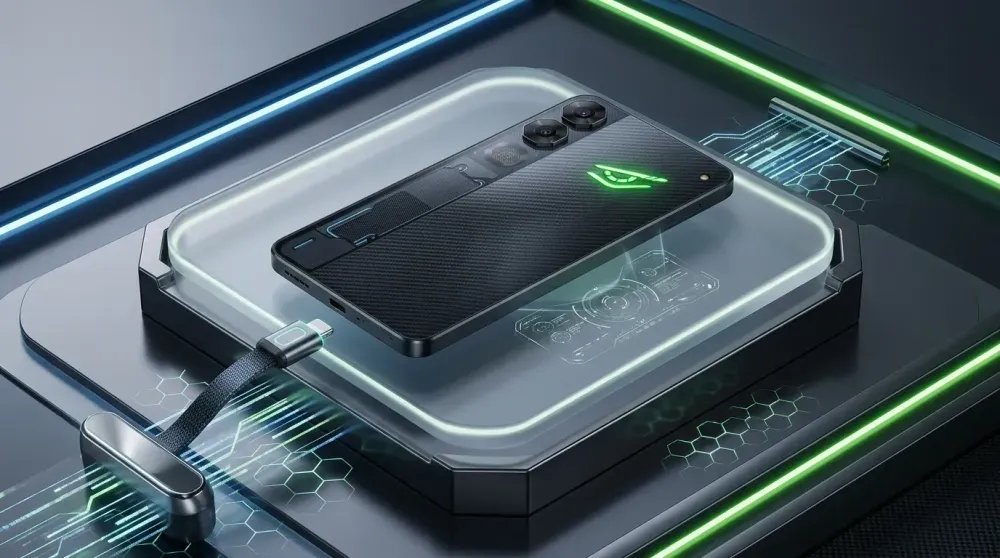
ZTE, through its nubia brand, is expanding its selection of gaming smartphones with the introduction of the nubia Neo 5 Max. This smartphone stands out quite a bit compared to most gaming phones currently on the market because it features a massive 7.5-inch display. In fact, nubia is introducing it as a device in a new category they call a PadPhone.
This concept attempts to combine multiple functions into a single device. Its size remains that of a portable smartphone, but the screen is built to approach that of a small tablet. On the other hand, nubia still provides various features typically found on gaming phones, ranging from shoulder triggers, a large cooling system, stereo speakers, to special AI features for gaming.
The nubia Neo 5 Max began rolling out globally in August 2026, with Southeast Asia being one of the first regions to receive the device.
ZTE nubia Neo 5 Max Specifications
Below is a summary of the nubia Neo 5 Max specifications based on official ZTE information and various regional sources that have marketed the device.
| Specification | ZTE nubia Neo 5 Max |
|---|---|
| Network | 2G, 3G, 4G LTE, 5G |
| SIM | Dual Nano SIM |
| Display | 7.5 inches, 1.5K resolution |
| Panel Type | IPS LCD on regional market specs |
| Resolution | Approximately 2664 x 1280 pixels |
| Refresh Rate | 120 Hz |
| Aspect Ratio | 18.7:9 |
| Display Features | SGS Eye Care, True DC Dimming, Magic Touch 3.0 |
| Chipset | MediaTek Dimensity 7100 |
| Chipset Fabrication | 6 nm |
| CPU | Octa-core, up to 2.4 GHz |
| GPU | Mali-G610 MC2 |
| RAM | 8 GB LPDDR5X |
| Extended RAM | Up to 12 GB virtual RAM |
| Total Marketed RAM | Up to 20 GB, 8 GB physical + 12 GB virtual |
| Storage | 256 GB / 512 GB |
| Storage Type | UFS 2.2 |
| microSD | Not available |
| Rear Camera | 50 MP main + 2.0 MP depth |
| Front Camera | 16 MP |
| Operating System | Android 16 |
| User Interface | MyOS 16 |
| Battery | 7,100 mAh Super Dual-Cell |
| Fast Charging | 45W |
| Bypass Charging | Yes |
| Cooling System | 30,000 mm²+ |
| Gaming Triggers | Neo Triggers 5.0 |
| Trigger Sampling Rate | 990 Hz |
| Trigger Latency | 4.7 ms |
| Speakers | Dual stereo speakers |
| Audio | Dolby Atmos, up to 300% volume |
| Haptics | Z-axis linear motor |
| Gaming | AI Game Space 5.0 |
| AI | AI Copilot Demi 2.0 |
| Antenna | 360° Game Antenna |
| NFC | Yes, region-dependent |
| Wi-Fi | Dual-band Wi-Fi |
| Bluetooth | Yes |
| GPS | GPS, GLONASS, Galileo, BDS |
| USB | USB Type-C |
| Fingerprint | Fingerprint sensor |
| Durability | IP64 |
| RGB Lighting | Eagle Eye RGB Dynamic Lighting |
| Colors | Shadow Black, Titanium Gold, Cyber Silver |
ZTE itself has confirmed the 7.5-inch 1.5K display, Dimensity 7100, LPDDR5X RAM, UFS 2.2 storage, 7,100 mAh battery, and a cooling system exceeding 30,000 mm². Details such as the IPS LCD panel and 120 Hz refresh rate are listed in the specifications for devices marketed in several Southeast Asian countries.
7.5-Inch Display as the Main Attraction
The most striking thing about the nubia Neo 5 Max is certainly its screen size. With a 7.5-inch diagonal, this device is much larger than ordinary smartphones, which generally use screens around 6.5 to 6.8 inches.
ZTE claims the Neo 5 Max's display area is about 27 percent larger than the nubia Neo 5 5G. The 18.7:9 screen ratio also provides a sufficiently wide view when the smartphone is used horizontally.
This size clearly offers advantages for gaming. Virtual buttons can be placed further apart so fingers do not obstruct the screen as much. When playing FPS games, the large field of view also helps users spot objects and opponents more easily.
Not just for gaming, this screen is also great for watching movies, opening documents, reading articles, or running two apps simultaneously via the split-screen feature.
nubia even provides an E-Ink Mode that adjusts the display to feel more comfortable for reading. There is also a Landscape Mode that allows the phone to be placed in a case with a stand so the device can function like a mini TV.
Dimensity 7100 as the Core Brain
For performance, the nubia Neo 5 Max uses the MediaTek Dimensity 7100 built on a 6 nm fabrication process. This chipset features an octa-core CPU with speeds up to 2.4 GHz and a Mali-G610 MC2 GPU.
This chipset is then paired with 8 GB of LPDDR5X RAM and 256 GB or 512 GB of UFS 2.2 storage. Users can also utilize up to 12 GB of additional virtual RAM, allowing nubia to market it with a total memory configuration of up to 20 GB.
The Neo 5 Max is not positioned as the absolute fastest flagship smartphone. Its focus is more on delivering a comfortable gaming experience through a combination of a large screen, extra controls, cooling, a large battery, and software optimization.
To help maintain performance during gaming, it features the NeoTurbo Engine and AI Game Space 5.0, which provide various gaming-specific features and settings.
Neo Triggers 5.0 Make Game Controls More Comfortable
nubia retains one of the signature traits of the Neo gaming series: shoulder triggers.
The Neo 5 Max uses Neo Triggers 5.0 with a sampling rate of up to 990 Hz and a hardware response latency of about 4.7 milliseconds.
These triggers can be mapped to extra buttons in games. For example, when playing an FPS game, the right button can be used to shoot while the left button is used to aim.
As a result, players can use four fingers simultaneously without having to place all the buttons on the screen.
nubia also uses a design optimized for a C-Grip hand position. The control area is made wider so that hands remain comfortable despite the device having a very large screen.
Cooling System Exceeding 30,000 mm²
A gaming phone with a large screen and a large battery naturally requires good thermal management. Therefore, nubia has installed a cooling system with an area of over 30,000 mm².
This system uses a dual-layer capillary vapor chamber and a three-dimensional VC panel. According to ZTE, this design is capable of increasing heat dissipation efficiency by about 140 percent.
Unlike the Neo 5 GT, which features an active fan, the Neo 5 Max approach relies more on a vapor chamber system with a very large cooling area.
This choice makes a lot of sense since the Neo 5 Max emphasizes a combination of gaming and multimedia usage rather than chasing sheer extreme performance.
7,100 mAh Battery Suited for Long Gaming Sessions
Its large body size also provides room for nubia to install a 7,100 mAh battery.
The battery uses a Super Dual-Cell design that divides the power supply into two cells. Aside from aiding efficiency, this design is also intended to reduce heat when the device is under heavy loads.
Supported fast charging reaches 45W. Given the large battery capacity, 45W is not the fastest in the gaming phone class. However, nubia provides a feature that is more important for users who frequently play while plugged into a charger: Bypass Charging.
With this feature, electricity can be used directly to run the device without constantly charging the battery. As a result, battery heat can be reduced when users play games for extended periods.
Audio and Vibration Built for Greater Immersion
The gaming experience is not just about graphics. nubia also equips the Neo 5 Max with dual symmetrical speakers supporting Dolby Atmos.
ZTE claims the speaker volume can reach up to 300 percent compared to the standard reference level. The speaker positions are also designed so they are not easily blocked by hands when the phone is used horizontally.
Additionally, there is a Z-axis linear motor to produce more tangible haptic feedback during specific in-game actions.
The back of the device is also equipped with Eagle Eye RGB Dynamic Lighting. This lighting adds to the gaming aesthetic and can produce lighting effects according to certain conditions.
AI Copilot Demi 2.0 Enters the Game
nubia doesn't just sell hardware specifications. The Neo 5 Max also receives AI Copilot Demi 2.0.
This AI is designed as a gaming assistant that can provide information and help during gameplay. In supported games, the system can offer guides, game state information, and gameplay-related suggestions.
There is also AI Game Space 5.0, which serves as the hub for various gaming settings, such as performance optimization, trigger adjustments, and other supportive features.
AI features like this will likely continue to evolve through software updates, so their utility may vary depending on the game and region.
Camera Is Not the Main Focus
On the camera side, the nubia Neo 5 Max carries a 50 MP main rear camera accompanied by a 2.0 MP depth sensor. Meanwhile, the front camera uses a 16 MP sensor.
This configuration is relatively modest compared to smartphones that prioritize photography.
This is not too surprising since the Neo 5 Max has been positioned from the start as a gaming and multimedia device. Therefore, most of the cost and internal space are directed toward the screen, cooling system, battery, and gaming control features.
For daily photos, video calls, and uploading content to social media, the camera remains quite functional. However, users who make camera quality a top priority may want to consider other options.
Conclusion
The ZTE nubia Neo 5 Max offers a quite distinct concept amidst current smartphone trends. Instead of making a normal-sized gaming device, nubia chose a super-large 7.5-inch screen that blurs the line between a smartphone and a tablet.
This large screen is paired with the Dimensity 7100, LPDDR5X RAM, a 7,100 mAh battery, over 30,000 mm² of cooling, Neo Triggers 5.0, Dolby Atmos speakers, and various AI-based gaming features.
The Neo 5 Max is clearly not a smartphone for everyone. Its large size might feel uncomfortable for users who prefer a compact phone. However, for gamers, media consumers, avid readers, multitaskers, or those who simply love large-screen smartphones, the PadPhone concept offered by nubia is quite compelling.
Moreover, nubia didn't just enlarge the screen. They also tailored the controls, cooling, battery, audio, and software so that the large size truly delivers practical benefits in daily use.
Related Articles
XRing O3, Xiaomi's Flagship Chip Getting More Serious in Rivaling Snapdragon
Written by
Wilan
A regular contributor to Bali Island Tekno who actively shares knowledge about technology, programming, and the world of software engineering.