
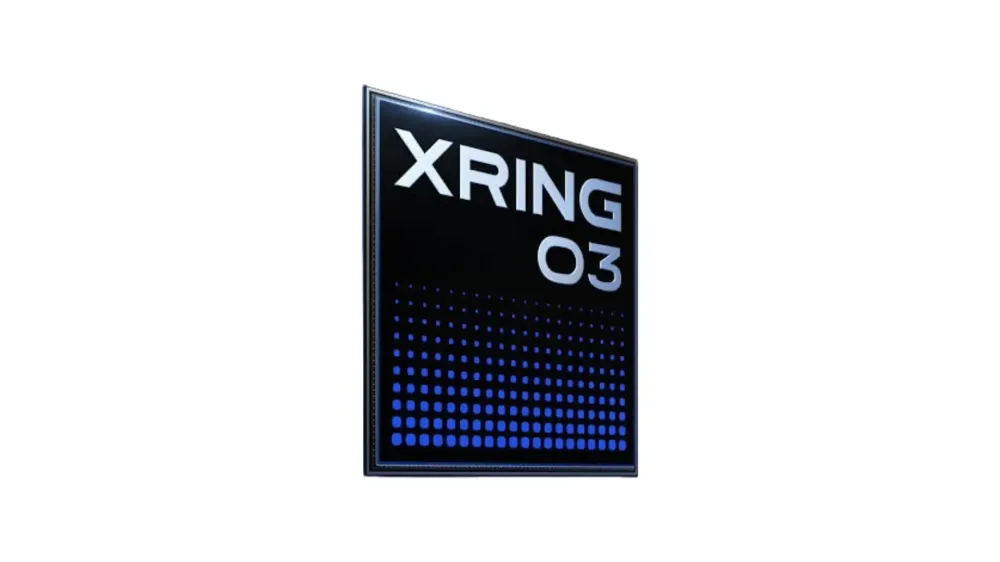
Xiaomi is increasingly serious about developing its own proprietary chipset. After previously introducing the XRing O1, the Chinese company has now unveiled the XRing O3, the latest flagship chipset designed for Xiaomi's high-end devices.
The XRing O3 is manufactured by TSMC using a 3nm fabrication process. This chip is a crucial part of Xiaomi's strategy to reduce its reliance on chipset suppliers like Qualcomm and MediaTek, while gaining greater control over hardware and software performance on its devices.
The chip uses a 10-core CPU configuration based on the Arm C1 architecture, paired with a 16-core Mali G2-Ultra NX GPU. Xiaomi has also equipped it with an NPU claimed to deliver AI performance of up to 200 TOPS, allowing various AI processes to run locally on the device much faster.
One of the most exciting aspects of the XRing O3 is its support for LPDDR6. This next-generation memory technology offers higher bandwidth than previous generations, making the XRing O3 one of the first smartphone chipsets to adopt it.
Graphics capability is also a major focus. The Mali G2-Ultra NX GPU brings AI-based technologies such as neural super sampling and frame generation. Simply put, this technology works similarly to the DLSS concept on PCs, enhancing visual quality and frame rates without excessively increasing power consumption.
In terms of performance, Xiaomi claims the XRing O3 scores around 5.22 million on AnTuTu V11. Early Geekbench benchmark results also show single-core performance of around 3,945 points and multi-core performance exceeding 15,000 points. However, real-world performance will certainly still heavily depend on the cooling system and optimization of each individual device. Based on these benchmark numbers, this could become a strong rival to the Snapdragon 8 Elite Gen 5.
The XRing O3 is already being used in the Xiaomi 18 Fold, Xiaomi's latest flagship foldable smartphone. The presence of this chipset demonstrates that Xiaomi no longer just wants to compete in terms of cameras, displays, or pricing, but is also starting to build its own core device technologies.
Related Articles


Written by
Wilan
A regular contributor to Bali Island Tekno who actively shares knowledge about technology, programming, and the world of software engineering.